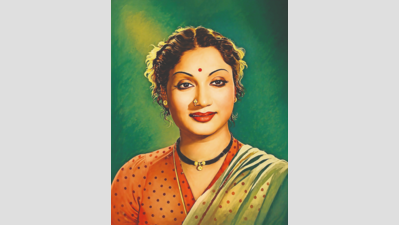
In an era when female roles in Indian cinema were often confined to demure housewives or tragic lovers, one woman charged through the frame with a swagger that defied the script. G Varalakshmi wasn’t just an actress—she was a force of disruption. With a cigarette dangling from her lips, a sharp retort ready, and a screen presence that refused to be tamed, she carved a niche as the rowdy actress who didn’t just play against type—she demolished it.
Her performances weren’t merely bold; they were revolutionary in context. While contemporaries played by the rules, Varalakshmi rewrote them, bringing a raw authenticity to roles that had no business being authentic in the first place. She didn’t seek approval. She sought impact. And she delivered.
Who Was G Varalakshmi?
Born in 1925 in Andhra Pradesh, G Varalakshmi entered the film industry at a time when cinema was still finding its voice in South India. Trained in classical dance and drama, she wasn’t a conventional beauty by the standards of the day—no soft features, no saccharine smiles. Instead, she radiated intensity. Her eyes held fire, her posture commanded attention, and her voice carried the weight of lived experience.
She began her career in theatre before transitioning to films, a path that grounded her in performance craft. Her debut in Vara Vikrayam (1939) was striking not for its success at the box office, but for the sheer audacity of her portrayal—a woman unafraid to challenge social hypocrisy, especially around dowry. Even then, the blueprint was clear: Varalakshmi would play women who questioned, resisted, and led.
Over the next three decades, she appeared in over 150 films across Telugu, Tamil, Kannada, and Hindi cinema. But numbers don’t capture her essence. What set her apart was agency—both on-screen and off. She produced films, wrote scripts, and fought for creative control in an industry dominated by male gatekeepers.
The "Rowdy" Persona: Myth or Method?
The label “rowdy actress” followed G Varalakshmi like a shadow. Critics used it dismissively, as if her defiance of decorum was a flaw. But for audiences hungry for realism, it was a badge of honor.
She wasn’t rowdy in the sense of chaos or lack of discipline. She was rowdy in the way a storm is rowdy—unpredictable, powerful, impossible to ignore. Her characters often wore pants when others wore saris, smoked on camera when others averted their gaze, and confronted patriarchy head-on when others whispered in silence.
Take her role in Devadasu (1953), where she played Chandramukhi—the courtesan with a heart of gold. While the character had been portrayed with tragic softness before, Varalakshmi infused her with resilience and irony. Her Chandramukhi didn’t beg for redemption; she demanded dignity. In one iconic scene, she laughs in the face of a judgmental relative, saying, “You call me fallen, but who built the cage you’re so afraid to leave?”
This wasn’t acting. It was protest.
Her performance in Pedda Manushulu (1954), a social drama exposing corruption among the elite, was equally incendiary. As a working-class woman who dares to speak truth to power, she embodied resistance. The film was banned in several regions—not because it was vulgar, but because it was dangerous. Dangerous to the status quo. Dangerous to silence.
Defying Convention: How She Changed the Game
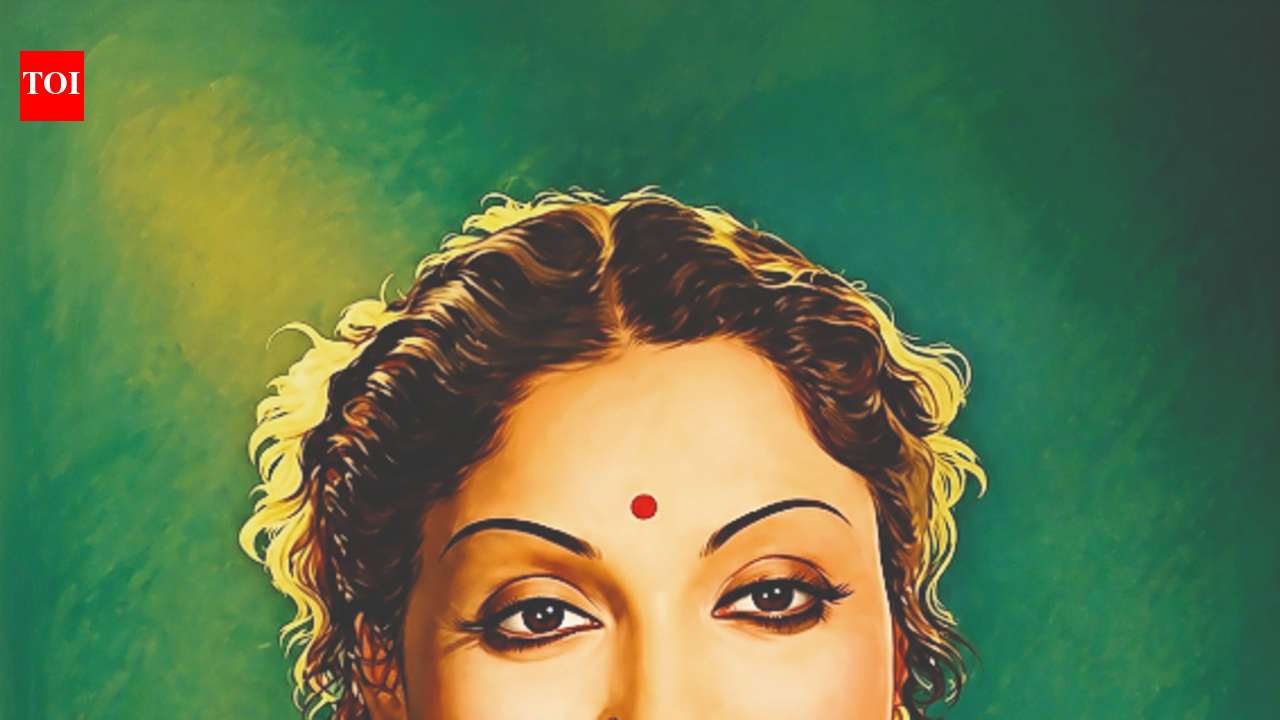
G Varalakshmi didn’t just break conventions—she exposed them as arbitrary. In an industry where female leads were expected to sing, dance, and die gracefully, she insisted on complexity.
She rejected the idea that women in cinema had to be either saints or sinners. Her characters were flawed, ambitious, sexually aware, and politically conscious. She played journalists, activists, single mothers, and entrepreneurs—roles that barely existed in scripts of the time.
Her decision to produce Chiranjeevulu (1956) was a landmark. As a female producer in the 1950s, she faced resistance at every level—financiers doubted her, studios questioned her vision, and distributors hesitated. But the film, which explored youth disillusionment and generational conflict, became a critical success. It proved that women could not only perform but lead behind the camera.
She also fought for better pay and working conditions, advocating for actors’ rights long before unions became powerful. On set, she was known to challenge directors who wanted to soften her dialogue or posture. “I’m not here to be pretty,” she reportedly said. “I’m here to be truthful.”
Stealing the Show: Signature Performances
What made G Varalakshmi steal the show wasn’t just her presence—it was her precision. She didn’t overact. She underplayed, letting silence and gaze do the work. Here are three performances that defined her legacy:
1. Cherapakura Chedevu (1954) As a revolutionary poet in colonial India, Varalakshmi embodied intellectual fury. Her delivery of politically charged verses wasn’t theatrical—it felt like a real call to arms. The film was suppressed by British-influenced censors, but bootleg reels circulated widely, turning her into a symbol of dissent.
2. Anna Thammudu (1958) Playing the sister of a corrupt politician, she delivered a monologue in the climax that shook audiences: “You built your house on lies, brother. I won’t live in it.” The scene went viral—by 1950s standards—sparking debates in newspapers and coffee houses.
3. Kula Gotralu (1962) A rare comedy role, where she played a matriarch who manipulates village caste politics for her own gain. Dark, satirical, and razor-sharp, her performance highlighted hypocrisy without losing humor. Critics called it “a masterclass in controlled chaos.”
These weren’t just standout roles—they were cultural moments. Each performance pushed boundaries, challenged norms, and expanded what Indian cinema could say.
The Price of Defiance Defying convention came at a cost.
G Varalakshmi was blacklisted by certain production houses. Her films were denied screenings in conservative districts. She was written off as “difficult” by journalists aligned with studio interests. Romantic leads refused to work with her, fearing her dominance would overshadow them.
Even awards eluded her. Despite her influence, she never won a state or national film award—likely due to her outsider status and refusal to play the industry game. Yet, she remained unapologetic.
“I’d rather be remembered for what I stood for,” she once said in an interview, “than for a trophy I had to beg for.”
She also faced personal scrutiny. Her smoking, her unmarried status, her outspoken politics—all were fodder for gossip columns. But she never retreated. She gave interviews in her own voice, wrote articles in magazines, and spoke at public forums. She turned her life into a manifesto.
Legacy: Why She Matters Today G Varalakshmi’s influence extends far beyond her filmography.

Modern actresses who play strong, independent, or morally ambiguous women—names like Revathi, Tabu, Sai Pallavi—stand on ground she helped pave. Her insistence on narrative authenticity prefigured the parallel cinema movement of the 1970s and 80s.
Her legacy is also one of ownership. She proved that artists—especially women—could control their stories. Long before “content creator” became a job title, she was writing, producing, and distributing her vision on her terms.
Film scholars now recognize her as a pioneer of feminist expression in Indian cinema. Her work is studied in universities for its socio-political subtext and performance technique. Restored prints of her films are screened at retrospectives, introducing new generations to her fire.
But perhaps her greatest legacy is attitude. In an industry still grappling with typecasting and gender bias, her example remains radical: Be bold. Be difficult. Be unforgettable.
The Unseen Side: Personal Philosophy and Beliefs
Behind the performances was a woman deeply engaged with ideas. A voracious reader, Varalakshmi was influenced by Tagore, Periyar, and international feminist thought. She supported the Self-Respect Movement in Tamil Nadu and advocated for women’s education.
She never married, not out of rejection of love, but because she refused to conform to institutional expectations. “Marriage isn’t freedom,” she said. “Freedom is choosing when, how, and whether.”
She lived simply, donating much of her earnings to orphanages and theatre groups. In later years, she mentored young actors, especially those from rural backgrounds, insisting that talent mattered more than connections.
Her life wasn’t cinematic in the glitzy sense. It was cinematic in the truthful sense—messy, passionate, uncompromising.
A Closing Thought: What Can We Learn?
G Varalakshmi didn’t wait for permission. She didn’t need validation to know her worth. She stepped into spaces where women weren’t welcome and made them hers.
For creators today—actors, writers, directors—her story is a call to authenticity. Not every role needs to be heroic, but every choice can be honest. Not every project will be popular, but it can be meaningful.
If you’re afraid of being labeled “too much,” remember: they called her rowdy too. And look who they remember.
Stand firm. Speak loud. Steal the show.
FAQ
Was G Varalakshmi really called "rowdy" in the media? Yes, several newspapers and film magazines used the term "rowdy actress" to describe her bold demeanor and defiant roles, often with a mix of criticism and fascination.
How many languages did G Varalakshmi act in? She performed in Telugu, Tamil, Kannada, and Hindi films, showcasing her versatility across regional industries.
Did G Varalakshmi win any major awards? Despite her influence, she did not receive major state or national film awards during her lifetime, a point often cited as an industry oversight.
Was she involved in politics? While not a politician, she supported social reform movements, particularly those advocating for women’s rights and anti-caste equality.
Is any of her work available to watch today? Some of her films have been restored and screened at film festivals. Others circulate in archival collections, though access remains limited.
What was her most controversial role? Her role in Cherapakura Chedevu, which included anti-colonial rhetoric, was banned in several regions, making it one of her most controversial performances.
Did she mentor other actresses? Yes, she privately mentored several young actors and supported theatre initiatives that trained underprivileged women in performance arts.
FAQ
What should you look for in G Varalakshmi: The Rebel Actress Who Broke the Mold? Focus on relevance, practical value, and how well the solution matches real user intent.
Is G Varalakshmi: The Rebel Actress Who Broke the Mold suitable for beginners? That depends on the workflow, but a clear step-by-step approach usually makes it easier to start.
How do you compare options around G Varalakshmi: The Rebel Actress Who Broke the Mold? Compare features, trust signals, limitations, pricing, and ease of implementation.
What mistakes should you avoid? Avoid generic choices, weak validation, and decisions based only on marketing claims.
What is the next best step? Shortlist the most relevant options, validate them quickly, and refine from real-world results.