Safety toolbox talks that matter don’t read from a script no one listens to. They’re sharp, relevant, and timed to the risks your team faces this week. Yet most fall into a loop of recycled topics, vague warnings, and disengaged crews. The result? A compliance checkbox with zero impact.
The real goal isn’t just to hold a meeting—it’s to change behavior. That starts with choosing weekly safety toolbox talk topics that reflect actual site conditions, upcoming tasks, seasonal hazards, and near-misses. When done right, these 10- to 15-minute discussions prevent incidents, reinforce accountability, and build a culture where safety is spoken, not just posted.
Here’s how to build a toolbox talk plan that sticks.
Why Most Weekly Toolbox Talks Fail
Too many teams treat safety talks like a formality. A supervisor pulls up last week’s topic on PPE, reads three bullet points, and calls it done. The crew nods along while checking their phones. No dialogue. No connection to the day’s work.
Common flaws include:
- Generic content – “Slip, trip, and fall” every January, regardless of whether crews are working at height or indoors.
- No follow-up – Talks aren’t tied to observations, audits, or corrective actions.
- One-size-fits-all delivery – The same message is given to electricians, heavy equipment operators, and warehouse staff.
- Lack of engagement – No questions, no stories, no shared ownership.
When toolbox talks become routine instead of relevant, people tune out. And in high-risk environments, tuning out costs more than time.
How to Choose High-Impact Weekly Topics
The best topics aren’t pulled from a generic list—they’re driven by real operational rhythms. Use this framework to align talks with actual risk exposure:
#### 1. Job-Specific Risks Match the talk to the task. If crews are setting up scaffolding, talk about fall protection and structural integrity. If hot work is scheduled, focus on fire prevention and permit requirements.
Example: A roofing crew preparing for a midweek install gets a 12-minute talk on overhead power line clearance—not electrical safety in general, but this job, this site, this hazard.
#### 2. Seasonal & Environmental Factors Weather changes bring new risks. Summer means heat stress; winter brings icy surfaces and cold stress. Adjust topics accordingly.
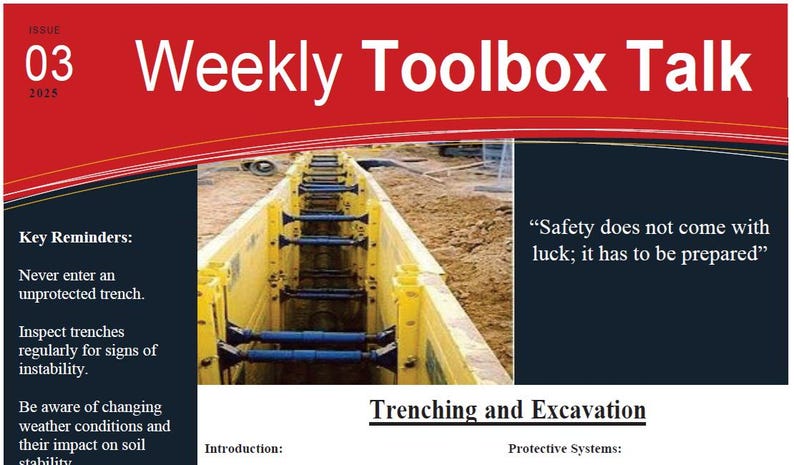
- Spring: Wet surfaces, mud, trench stability
- Summer: Hydration, UV exposure, fatigue
- Fall: Reduced daylight, leaf cover hiding trip hazards
- Winter: Slip prevention, equipment warm-up, frostbite signs
#### 3. Near-Misses & Recent Incidents Nothing grabs attention like a close call. If a forklift nearly struck a worker yesterday, make that tomorrow’s talk. Analyze what happened, why it happened, and how to prevent it.
Use the 5 Whys technique: Why did the forklift swing wide? → Blind corner. Why no spotter? → Not required in procedure. Why not? → Procedure outdated.
Now you’re not just talking safety—you’re fixing systems.
#### 4. Upcoming Project Phases Plan ahead. If next week involves confined space entry, start the conversation now. Cover permit requirements, gas testing, rescue plans, and communication checks.
Pro tip: Pair the talk with a walkthrough of the actual space. Seeing the hazard beats hearing about it.
#### 5. Feedback from the Field Let workers suggest topics. A welder might flag poor ventilation in a current area. A laborer might note damaged gloves going unreported. These are goldmines for meaningful discussions.
10 Proven Weekly Safety Toolbox Talk Topics (With Use Cases)
These aren’t random suggestions—they’re drawn from high-performing safety programs across construction, manufacturing, and maintenance teams.
#### 1. Lockout/Tagout – Real-World Scenarios - Use case: Maintenance team prepping for machine repair. - Focus: Energy isolation steps, verifying zero energy, group LOTO roles. - Mistake to highlight: Assuming a machine is off because it’s not running—without verifying isolation.
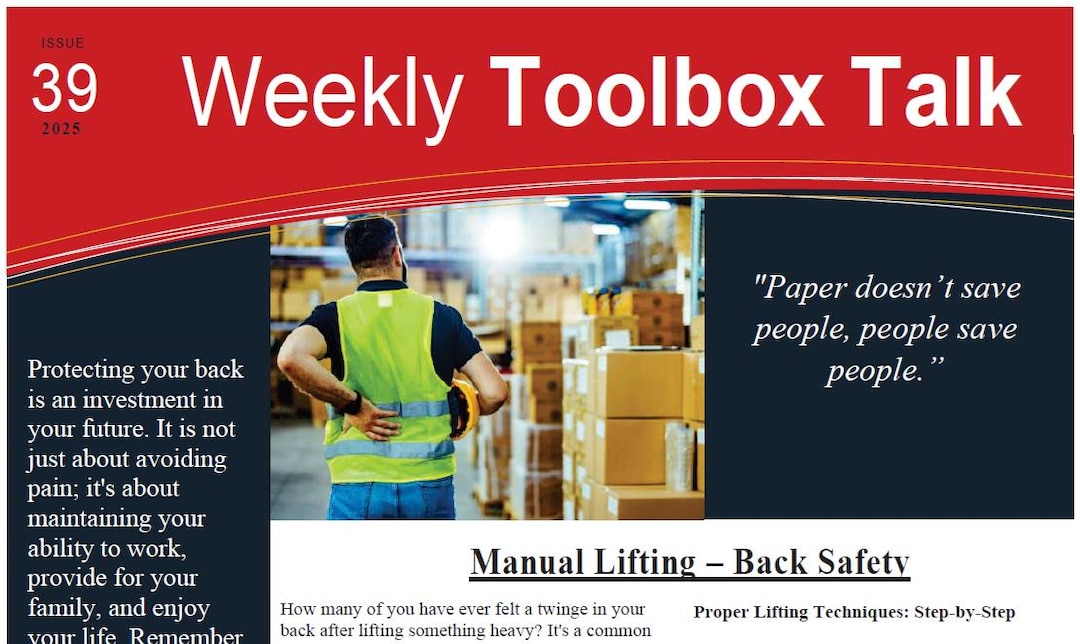
#### 2. Ergonomics in Daily Tasks - Use case: Warehouse staff doing repetitive lifting. - Focus: Proper lifting mechanics, use of mechanical aids, signs of strain. - Engagement tip: Have workers demo lifting a box—then critique form as a group.
#### 3. Hazard Reporting – Why Silence Is Dangerous - Use case: After a near-miss goes unreported. - Focus: Psychological safety, reporting channels, how small issues escalate. - Example: A cracked ladder rung reported early prevents a fall weeks later.
#### 4. PPE Fit and Function – Beyond the Checklist - Use case: Crews using respirators or hearing protection. - Focus: Seal checks, wear time limits, inspection for damage. - Limitation note: PPE is the last line of defense—elimination and engineering controls come first.
#### 5. Work Zone Awareness – Staying Visible - Use case: Night work or high-traffic areas. - Focus: Hi-vis standards, lighting, positioning relative to vehicles. - Real mistake: Workers facing equipment with backs to traffic—“I didn’t hear it coming.”
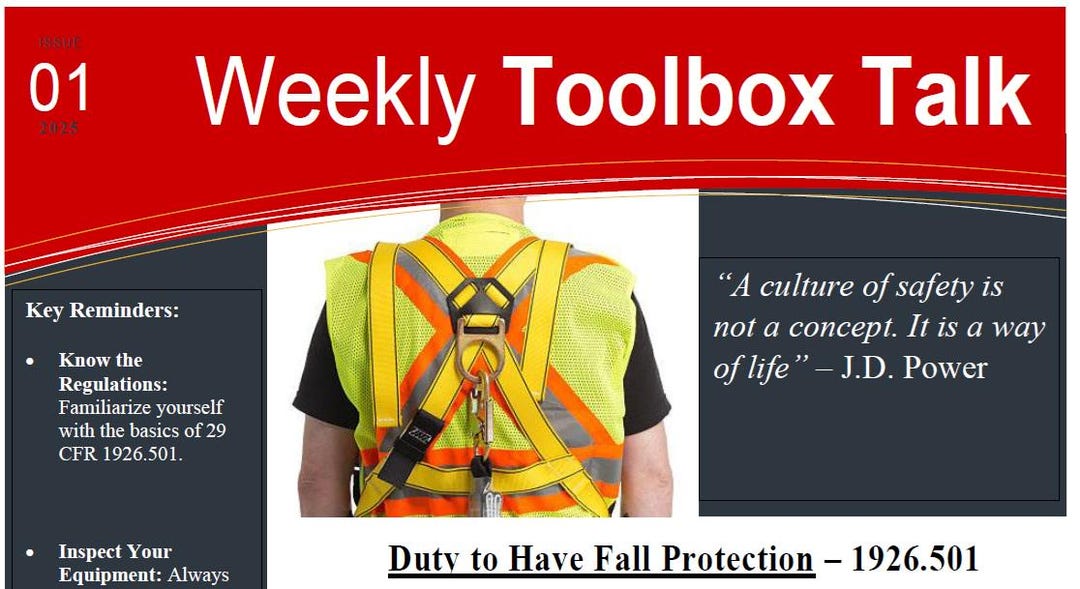
#### 6. Fall Protection – Anchor Points and Clearances - Use case: Rooftop HVAC installation. - Focus: Proper anchorage selection, fall distance calculation, rescue planning. - Hands-on element: Inspect harnesses together—check D-rings, straps, expiration dates.
#### 7. Hot Work Safety – Beyond the Permit - Use case: Welding in a mechanical room. - Focus: Fire watch responsibilities, combustible clearance, extinguisher readiness. - Gap often missed: Post-job monitoring—fires can smolder for hours.
#### 8. Communication in High-Noise Areas - Use case: Demolition site with jackhammers. - Focus: Hand signals, radio protocols, confirmation loops. - Test it: Have two workers communicate across the yard using only gestures.
#### 9. Slips, Trips, and Falls – Housekeeping as Prevention - Use case: End-of-day clean-up. - Focus: Tool storage, cord management, spill response. - Visual cue: Take a photo of a cluttered workspace—use it as a discussion starter.
#### 10. Stress and Fatigue – The Invisible Hazards - Use case: Overtime periods or tight deadlines. - Focus: Signs of mental fatigue, peer check-ins, when to speak up. - Myth to bust: “Toughing it out” makes you a hero—it makes you a risk.
Making Talks Stick: Engagement Techniques That Work
A great topic dies if delivered poorly. Here’s how to turn passive listeners into active participants:
- Start with a question: “Who’s seen a near-miss this week?”
- Use real photos: Show a hazard from your site (anonymized if needed).
- Role-play responses: “What would you do if you saw a co-worker bypassing a guard?”
- End with action: Assign one safety observation per person before the shift ends.
- Rotate facilitators: Let crew leads or senior workers run a talk—ownership increases buy-in.
One electrical contractor saw a 40% drop in recordables after switching to worker-led talks. The content didn’t change much—but the delivery did.
Integrating Toolbox Talks Into Your Safety System
These talks shouldn’t live in isolation. They work best when connected to:
- Daily inspections – Reference findings in that day’s talk.
- Job hazard analyses (JHAs) – Align topics with current JHA risks.
- Safety audits – Use audit gaps to shape future topics.
- Training records – Log attendance and topics for compliance and trend analysis.
Example workflow: Monday morning – Review weekend incident reports → select Tuesday’s topic Tuesday – Deliver talk, assign observation task Wednesday – Supervisor follows up on observations Thursday – Share findings in next talk
This turns a one-off chat into a feedback loop.
Common Pitfalls (And How to Avoid Them)
Even well-intentioned programs go off track. Watch for these traps:
- Overloading the talk: Stick to one focused topic. “Today we’re talking about ladder safety—just ladders. Not fall protection, not scaffolding.”
- Skipping documentation: Use a simple log—date, topic, attendees, facilitator. Digital tools help, but a clipboard works.
- Ignoring cultural factors: On multilingual sites, ensure understanding—not just translation, but comprehension.
- One-way delivery: If no one speaks, the talk failed. Ask open-ended questions.
One superintendent tracks engagement by counting raised hands. Less than three? He rethinks the approach.
Final Thought: Relevance Over Routine
The most effective weekly safety toolbox talk isn’t the one that checks a box—it’s the one someone remembers during a moment of risk. It’s the conversation that makes a worker pause before bypassing a guard, or speak up when they see a hazard.
Choose topics that mirror your site’s rhythm. Build them from real work, real risks, and real people. Make them short, sharp, and participative.
Then, watch safety shift from policy to practice.
FAQ
What should a weekly toolbox talk include? A clear topic, real-world relevance, hazard discussion, prevention strategies, and team interaction. Keep it under 15 minutes with a focus on one specific risk.
How often should toolbox talks be held? Weekly is standard, but frequency can increase during high-risk phases or after incidents. Consistency matters more than frequency.
Who should lead a toolbox talk? Supervisors typically lead, but rotating facilitators—including experienced crew members—can boost engagement and ownership.
Are toolbox talks a legal requirement? Not universally, but OSHA and other regulators expect regular safety communication. Toolbox talks are a recognized best practice for compliance and risk reduction.
How do you document toolbox talks? Use a sign-in sheet or digital log with date, topic, attendees, and facilitator. Store records for audits and trend tracking.
Can toolbox talks reduce injury rates? Yes—when well-run and relevant. Studies and field data show consistent, engaging talks correlate with lower incident rates and faster hazard reporting.
What’s the difference between a safety meeting and a toolbox talk? Toolbox talks are brief, focused, and task-specific—usually 10–15 minutes. Safety meetings are longer, broader, and may cover policy, metrics, or planning.
FAQ
What should you look for in Weekly Safety Toolbox Talk Topics That Actually Work? Focus on relevance, practical value, and how well the solution matches real user intent.
Is Weekly Safety Toolbox Talk Topics That Actually Work suitable for beginners? That depends on the workflow, but a clear step-by-step approach usually makes it easier to start.
How do you compare options around Weekly Safety Toolbox Talk Topics That Actually Work? Compare features, trust signals, limitations, pricing, and ease of implementation.
What mistakes should you avoid? Avoid generic choices, weak validation, and decisions based only on marketing claims.
What is the next best step? Shortlist the most relevant options, validate them quickly, and refine from real-world results.